
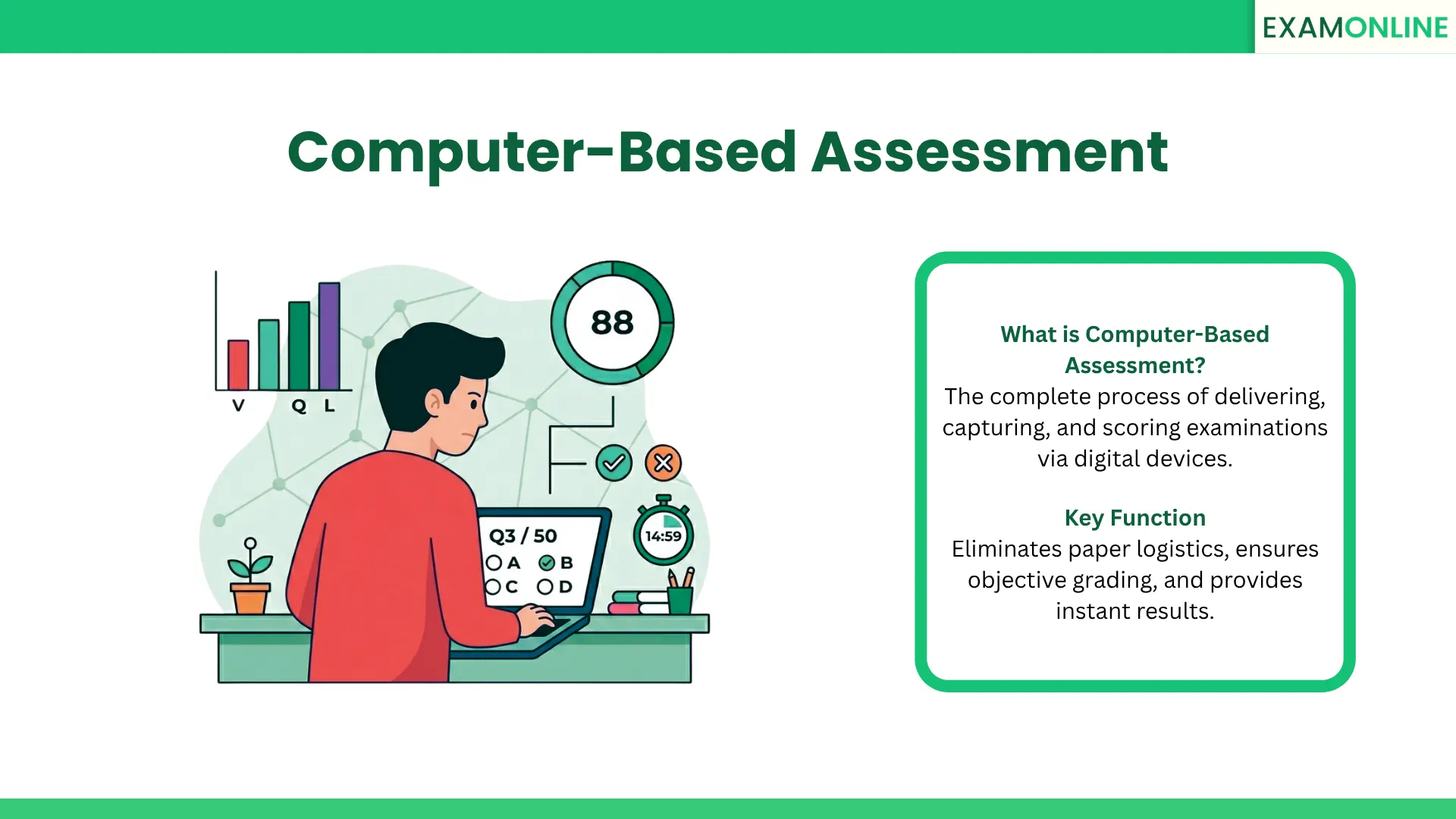
What is Computer-Based Assessment?
Computer-based assessment refers to the comprehensive practice of administering tests, quizzes, and formal examinations via computers or mobile devices rather than using traditional pen and paper. This method encompasses the entire lifecycle of an exam, from the digital creation of the question paper to the final automated scoring and reporting.
By utilizing dedicated Digital Evaluation Software, organizations can transition away from the logistical bottlenecks of physical test centers. Whether used for academic grading, corporate compliance, or IT certifications, computer-based assessment ensures a standardized, highly secure, and efficient evaluation environment. It is the definitive modern standard for measuring knowledge and capabilities at scale.
Key Aspects of Computer-Based Assessment
For a digital testing program to be credible and effective, it must be built on the following key principles:
- End-to-End Digitization: Every step, including candidate registration, identity verification, test delivery, and grading, occurs within a unified digital ecosystem.
- Dynamic Delivery: Unlike static paper tests, digital assessments can randomize question order and answer options to prevent candidates from copying one another.
- Objective Consistency: Automated scoring algorithms ensure that every single candidate is graded with the exact same mathematical precision, completely eliminating human bias.
- Uncompromising Security: Advanced monitoring systems are integrated directly into the test environment to uphold strict Test Integrity.
Core Components of Computer-Based Assessment
A robust digital testing architecture relies on three integrated layers to function seamlessly:
- The Authoring Interface: The administrative dashboard where educators or HR professionals create test templates, set passing marks, and upload questions to the item bank.
- The Candidate Interface: The secure, user-friendly screen where the test-taker interacts with the questions, manages their time, and submits their responses.
- The Cloud Infrastructure: The secure backend server that hosts the Assessment Engine, ensuring the platform can handle thousands of simultaneous logins without crashing.
Application of Computer-Based Assessment
The flexibility of digital testing allows it to be deployed across a wide variety of high-stakes and low-stakes scenarios:
- Global Certifications: IT and professional bodies use it to deliver standardized licensing exams to professionals in different countries simultaneously.
- University Admissions: Academic institutions conduct mass entrance exams digitally to accelerate the admissions timeline and accurately rank applicants.
- Corporate Hiring: HR teams deploy tests during the recruitment phase to quickly filter out unqualified candidates before investing time in interviews.
- Distributed Workforce Evaluation: Companies administer a Remote Exam to evaluate employees working from home, ensuring corporate compliance and training standards are met globally.
Benefits of Computer-Based Assessment
Moving from paper-based testing to a fully digital format yields massive organizational advantages:
- Drastic Cost Reduction: Organizations save significantly by eliminating the costs associated with printing, storing, and physically shipping thousands of paper booklets.
- Accelerated Timelines: Because the grading is instantaneous, organizations can issue results, certificates, or job offers in hours rather than weeks.
- Environmental Sustainability: Transitioning to a paperless testing model dramatically reduces the carbon footprint of the testing organization.
- Deep Data Insights: The software tracks every interaction, feeding data into Talent Analytics tools that help organizations understand item difficulty and overall cohort performance.
Features of a Digital Assessment Engine
To execute high-stakes computer-based assessment, the platform must be equipped with specialized technological features:
- Secure Browser Lockdown: Technology that prevents candidates from opening new tabs, copying text, or accessing external applications during the exam.
- AI Based Proctoring: Integrating webcam monitoring, screen recording, and automated behavioral analysis to flag suspicious activity in real-time.
- Rich Media Support: The ability to move beyond multiple-choice questions by incorporating video clips, coding compilers, and drag-and-drop elements.
- Automated Result Generation: A powerful Assessment Engine that instantly grades complex question formats and generates customized scorecards upon submission.
Conclusion
Computer-based assessment has revolutionized the way the world measures knowledge and skills. By eliminating the inefficiencies of paper and introducing advanced security and automation, organizations can evaluate candidates faster, fairer, and more accurately than ever before. With a comprehensive and secure platform like ExamOnline, institutions can confidently transition to a fully digital testing strategy, unlocking unprecedented scalability and actionable insights.
Related Keywords: Digital Evaluation Software, Assessment Engine, AI Based Proctoring, Test Integrity, Remote Exam.