
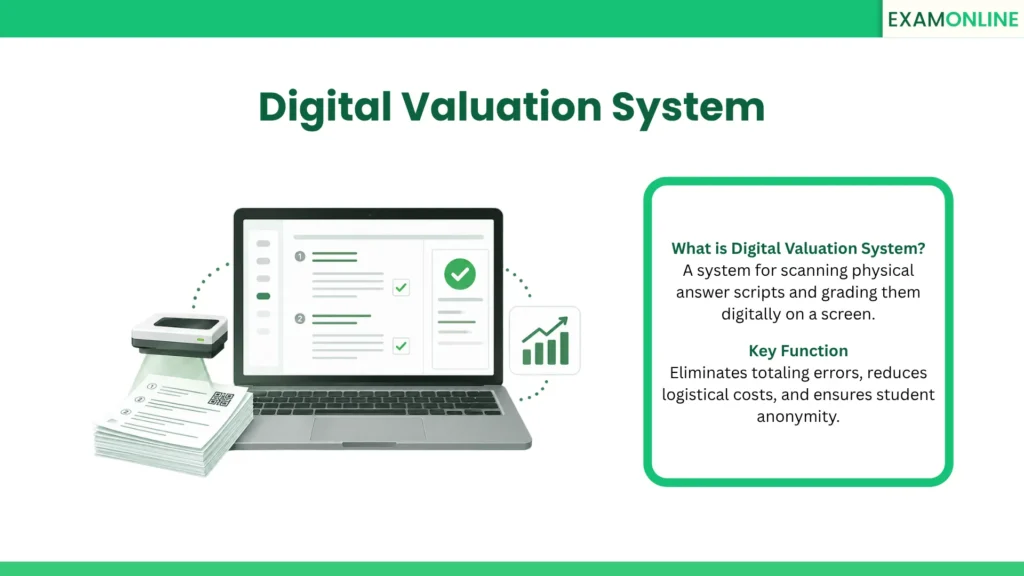
What is a Digital Valuation System?
A Digital Valuation System is a specialized technological framework used by educational institutions and boards to grade paper-based examinations electronically. Traditionally, examiners would physically handle bundles of answer scripts, marking them with pens and manually totaling the scores.
This system replaces manual labor by scanning physical booklets into high-resolution digital files. These files are then uploaded to a secure server where evaluators can grade them using a computer interface. This process is often referred to as On-Screen Marking or Digital Evaluation.
By moving the process to a digital environment, the Digital Valuation System eliminates the risks associated with the physical transit of answer books. It prevents issues such as loss, damage, or unauthorized access to sensitive documents.
It creates a centralized hub where every mark, comment, and annotation is recorded in real-time. This provides an unprecedented level of transparency and accountability to the entire examination lifecycle.
Importance and Benefits
The primary importance of a Digital Valuation System lies in its ability to guarantee “Result Integrity.” In manual systems, totaling errors are incredibly common. An examiner might miss a page or miscalculate the final sum of marks.
In a Digital Valuation System, the software automatically calculates the totals as the examiner enters marks for each question. This prevents calculation errors entirely. It ensures that the student receives exactly what they earned without human error.
Another major benefit is the drastic reduction in administrative and logistical costs. Moving thousands of physical answer sheets across different cities is expensive and risky. The digital approach allows examiners to log in from secure, designated centers.
This speed leads to faster result declarations. Rapid results are crucial for students waiting to apply for higher education or competitive jobs. It streamlines the transition from the exam hall to the final certificate.
Furthermore, the system can incorporate Psychometric analysis to monitor examiner behavior. If an examiner is marking scripts too quickly or showing signs of extreme leniency, the system flags these scripts for review. This ensures that the evaluation remains fair and consistent across different evaluators.
Key Features and Aspects
A robust Digital Valuation System is packed with features designed to assist the examiner while maintaining strict security. One of the most important aspects is “Candidate Anonymity” or masking.
The system hides the student’s name, roll number, and school details from the examiner. This prevents any form of conscious or subconscious bias. It ensures that the script is judged purely on its academic merit.
The Digital Evaluation Software interface also provides specialized annotation tools. Evaluators can use digital ticks, crosses, and stamps for specific feedback. These tools make the marking process more intuitive and standardized.
Many systems require the examiner to view every single page, including blank ones, before the script can be submitted. This feature prevents accidental omissions. It solves a common problem in physical marking where pages can sometimes stick together and be overlooked.
Additionally, the system offers “Live Progress Tracking” for administrators. At any given moment, the examination board can see how many scripts have been valued. They can monitor pending tasks and see which examiners are meeting their daily quotas.
Steps for Implementation
Transitioning to a Digital Valuation System requires a calculated approach to ensure a smooth transition from legacy methods:
- Step 1: Digitization and Scanning. Immediately after the exam, booklets are collected and sent to scanning centers. They are converted into secure digital packets. These packets are then uploaded to the central Assessment Platform.
- Step 2: Examiner Mapping. Administrators assign specific subjects and packets to qualified examiners. Each examiner is given unique login credentials. This creates a clear audit trail of who marked which script.
- Step 3: Technical Training. Before the live marking begins, examiners must undergo Technical Training. They need to familiarize themselves with the digital tools and specific marking rubrics configured within the software.
- Step 4: The Marking Phase. Evaluators log in and begin grading the digital scripts. The Digital Valuation System monitors their speed and accuracy. If a script requires a second opinion, it can be instantly routed to a senior moderator.
- Step 5: Analysis and Results. Once valuation is complete, the system aggregates the scores. Administrators can use Talent Analytics to review performance trends. They can identify which questions were the most difficult for students.
Conclusion
The Digital Valuation System is no longer a luxury. It is a necessity for modern educational institutions aiming for global standards of transparency. By eliminating the bottlenecks of physical logistics, it restores trust in the examination process.
As education continues to evolve, these digital repositories will provide the data needed to refine teaching methods. In the long run, these systems improve student outcomes by providing accurate and timely feedback.
ExamOnline provides a secure, enterprise-grade assessment platform and remote proctoring solution that ensures the data fed into any Digital Valuation System is protected by the highest levels of encryption and behavioral monitoring.
Related Keywords: Structured Interview, Skills Assessment, Talent Management, Virtual Assessment Center, Virtual Exam Monitoring.