
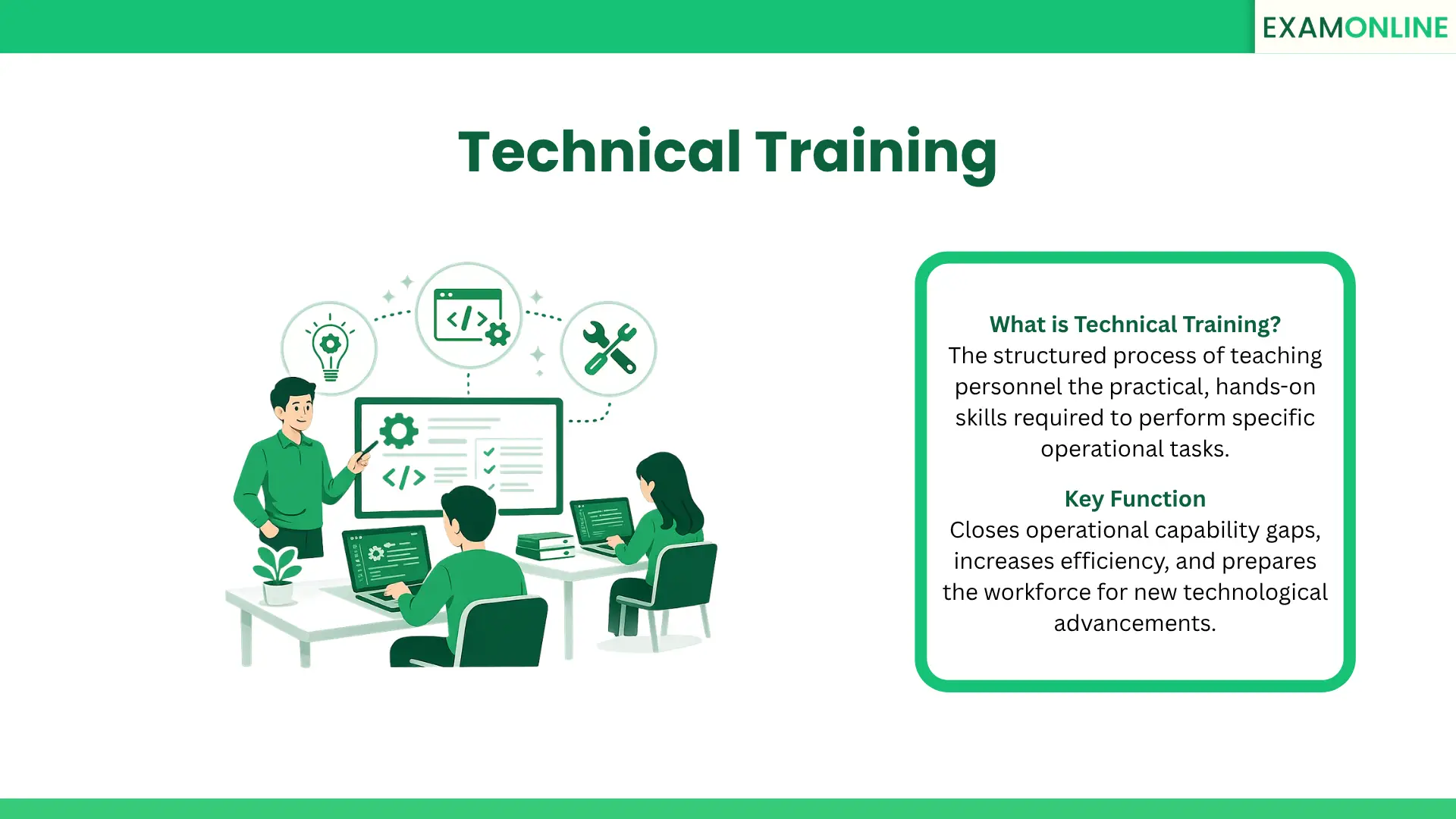
What is Technical Training
Technical Training is the structured, formal process of teaching employees the specific, hands-on competencies required to perform their daily job functions. Unlike soft skills education, which focuses on interpersonal communication or leadership theory, this educational framework is entirely dedicated to hard, practical knowledge. It ensures that personnel can confidently operate specialized software, machinery, or complex internal systems.
In a rapidly evolving digital landscape, maintaining a workforce with highly relevant Domain Skills is no longer optional. A robust educational program enables organizations to close capability gaps, adapt to new technologies seamlessly, and empower their teams to drive measurable, long-term business growth.
Types of Technical Training
Because different roles require different levels of practical expertise, organizations must utilize a variety of learning modalities to effectively educate their workforce:
- On-the-Job Education: Real-time, practical learning that takes place directly in the workplace. Employees master their daily tasks under the strict guidance of experienced mentors.
- Classroom-Based Instruction: Traditional, instructor-led sessions designed to build foundational theory before employees move on to practical application.
- Online Learning: Utilizing a Learning Management System (LMS) to deliver digital courses. This provides ultimate flexibility, allowing remote or global teams to access critical education at their own pace.
- Simulation-Based Learning: Creating highly realistic virtual environments to mimic complex scenarios. This is critical for high-stakes professions, such as aviation or cybersecurity, where making a real-world mistake is too dangerous.
- Certification Programs: Standardized courses that culminate in an exam, officially validating an employee’s proficiency in specific coding languages, software platforms, or data analysis tools.
Strategic Benefits of Technical Training
Investing capital and time into the ongoing education of your workforce yields massive operational advantages:
- Enhanced Employee Productivity: When personnel fully master their required tools, they make fewer errors and complete tasks at a much faster rate.
- Increased Job Satisfaction: Employees feel highly valued and confident when they are given the exact tools and knowledge they need to succeed, directly boosting morale and long-term retention.
- Future-Proofing the Business: Proactive Digital Upskilling and Reskilling initiatives ensure the company is never caught off guard by sudden industry shifts or the introduction of new technologies.
- Improved Business Outcomes: A highly capable team delivers superior project results, drives higher customer satisfaction, and maximizes the overall return on investment for the company.
Real-World Examples of Technical Training
Several global industry leaders have built exceptional models for educating their talent and closing capability gaps:
- Google IT Support Certificate: An online curriculum designed to take individuals with zero background knowledge and prepare them for entry-level IT roles, focusing heavily on network troubleshooting and security.
- Microsoft Learn: A comprehensive platform offering highly specific, role-based certifications for cloud computing and data analytics software.
- Tesla Technician Workshops: A blended learning approach that teaches automotive technicians exactly how to maintain and repair advanced electric vehicle hardware through both digital modules and hands-on laboratory work.
- Amazon Machine Learning University: An internal initiative built to advance the artificial intelligence capabilities of its own workforce, fostering internal innovation.
Challenges in Implementation
Building a successful educational pipeline is complex. Organizations frequently encounter specific roadblocks that must be navigated carefully:
- Skill Gap Identification: Companies often struggle to pinpoint exactly what knowledge is missing. Without accurate data, training budgets are easily wasted on irrelevant topics.
- Budget and Time Limitations: Developing custom, high-quality technical curriculum requires significant financial investment and takes employees away from their daily revenue-generating tasks.
- Sustaining Employee Engagement: Getting busy professionals to actively participate in and complete self-paced digital courses can be highly difficult without proper incentives.
- Rapid Technological Shifts: The moment a course is finalized, a software update can render it obsolete. Keeping the curriculum accurate requires relentless maintenance.
How to Implement and Design an Effective Program
To build a program that genuinely impacts performance, business leaders must follow a strategic, step-by-step approach:
- Conduct a Needs Assessment: Utilize a Competency-Based Assessment to identify exactly where your team is struggling. Map these gaps directly to specific job roles and overall company targets.
- Leverage Modern Platforms: Deploy a centralized Learning Management System (LMS) to deliver, track, and measure the success of all digital courses in one place.
- Incorporate Microlearning: Do not overwhelm learners with hours of video. Break complex technical concepts into bite-sized, five-minute modules that are easy to digest and immediately applicable.
- Blend Your Delivery: Mix self-paced digital reading with live instructor sessions and hands-on practice labs to cater to all learning styles.
- Measure and Iterate: Continuously review completion rates and error logs to see if the education is actually improving daily operations. Update the material instantly when technology changes.
The Future of Technical Training
As organizations look toward the future, the methods used to educate talent will become vastly more sophisticated. Artificial intelligence will soon curate deeply personalized learning paths for every individual employee based on their unique learning speed. Furthermore, Augmented Reality (AR) and Virtual Reality (VR) will make immersive, risk-free simulations accessible to a much wider variety of industries, completely transforming how practical skills are mastered.
Related Terms: General Aptitude, Identity Verification, Job Simulation, Learning Agility, Online Assessment.