
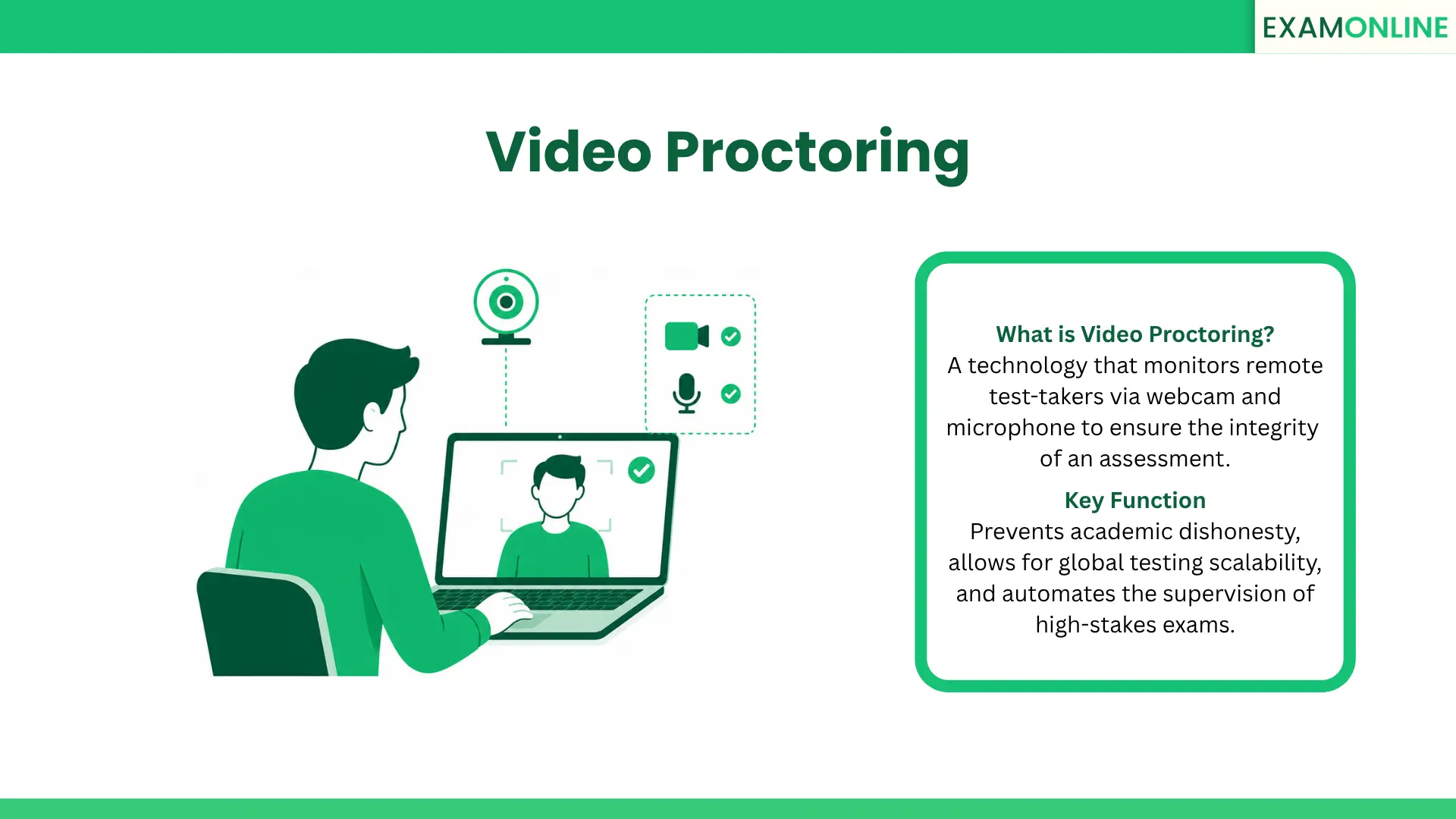
What is Video Proctoring
Video Proctoring, frequently referred to as remote proctoring, is a sophisticated assessment technology that enables organizations to conduct highly secure exams for candidates located anywhere in the world.
By utilizing a candidate’s webcam and microphone, this technology actively monitors the test-taker’s behavior and their physical surroundings in real-time. This ensures that the individual takes the exam under the exact same strict, controlled conditions they would experience in a physical testing center.
With the rapid rise of remote work and globalized talent acquisition, traditional in-person testing has become logistically impossible for many organizations. By leveraging video proctoring, HR managers and educational institutions can achieve massive scalability while executing rigorous Cheating Prevention, ensuring the final results are credible and the hiring process remains fair.
Types of Video Proctoring
Because different assessments carry different levels of risk, organizations can deploy varying levels of visual supervision to match their specific security needs:
- Live Proctoring: The most stringent method. A trained human invigilator watches the live video feed of the candidate continuously. If they spot suspicious behavior, they can intervene instantly, pausing or terminating the exam in real-time.
- Recorded Proctoring: The candidate’s webcam and screen activity are recorded for the entire duration of the exam. There is no live human watching, but administrators can review the footage later to verify compliance.
- Automated Proctoring: This method utilizes highly advanced artificial intelligence (AI) and machine learning. The AI acts as the invigilator, automatically tracking eye movements and background noise. It flags any anomalies without requiring human intervention during the test.
- Hybrid Proctoring: A blend of automated and live methods. The AI handles the baseline Continuous Monitoring of thousands of candidates simultaneously, but if it detects a complex issue, it alerts a live human proctor to step in and investigate.
- Lockdown Browser Integration: While not a video feed itself, this is almost always used in conjunction with cameras. The Lockdown Browser takes control of the candidate’s computer, preventing them from opening new tabs, using keyboard shortcuts, or accessing unauthorized software while the camera watches them.
Advantages and Strategic Benefits
Transitioning away from physical testing centers to a visually monitored remote system provides massive organizational benefits:
- Global Geographical Flexibility: It completely removes geographical barriers, allowing recruiters to source talent from anywhere in the world without forcing candidates to travel to a testing facility.
- Massive Cost Savings: Eliminates the exorbitant financial costs associated with renting physical testing halls and hiring dozens of on-site supervisors.
- High Scalability: Whether testing ten candidates or ten thousand simultaneously, the logistical effort remains exactly the same.
- Unmatched Assessment Integrity: Advanced AI and live tracking ensure that the results are a true reflection of the candidate’s actual capability, protecting the credibility of the credential or job offer.
- Eco-Friendly Operations: It significantly reduces the carbon footprint associated with candidate travel and the massive paper waste of traditional exams.
How Video Proctoring Works
Deploying a secure remote exam requires a structured, multi-step process to ensure total Test Environment Control:
- Test Setup: Administrators configure the exam settings within the platform, deciding whether to use live, recorded, or automated monitoring.
- Candidate Authentication: Before seeing the first question, candidates must prove their identity. This often involves holding a government-issued ID to the webcam and using facial recognition software to match the ID to the live video feed.
- Environment Check (Room Scan): Candidates are usually required to pick up their webcam and provide a 360-degree view of their physical room, proving there are no hidden notes, secondary devices, or other people present.
- Active Test Monitoring: The exam begins, and the Online Exam Proctoring system tracks the candidate’s audio, video, and screen activity for the duration of the time limit.
- Incident Report Generation: Once the exam concludes, the system generates a detailed, time-stamped report flagging any suspicious behavior, allowing administrators to review the footage and make a final decision regarding the candidate’s integrity.
Conclusion
Video proctoring is an absolute necessity for any organization looking to scale its hiring or educational testing globally. By replacing physical logistics with sophisticated AI and live webcam monitoring, institutions can evaluate talent from anywhere in the world without ever compromising on security.
To ensure a seamless and highly secure remote testing experience, ExamOnline provides robust Video Proctoring Solutions, offering the flexible, automated, and live monitoring tools required to protect the integrity of your most critical assessments.
Related Terms: Smart Proctoring, Remote Proctoring, Proctoring Software, Live Proctoring, Human Proctoring.