
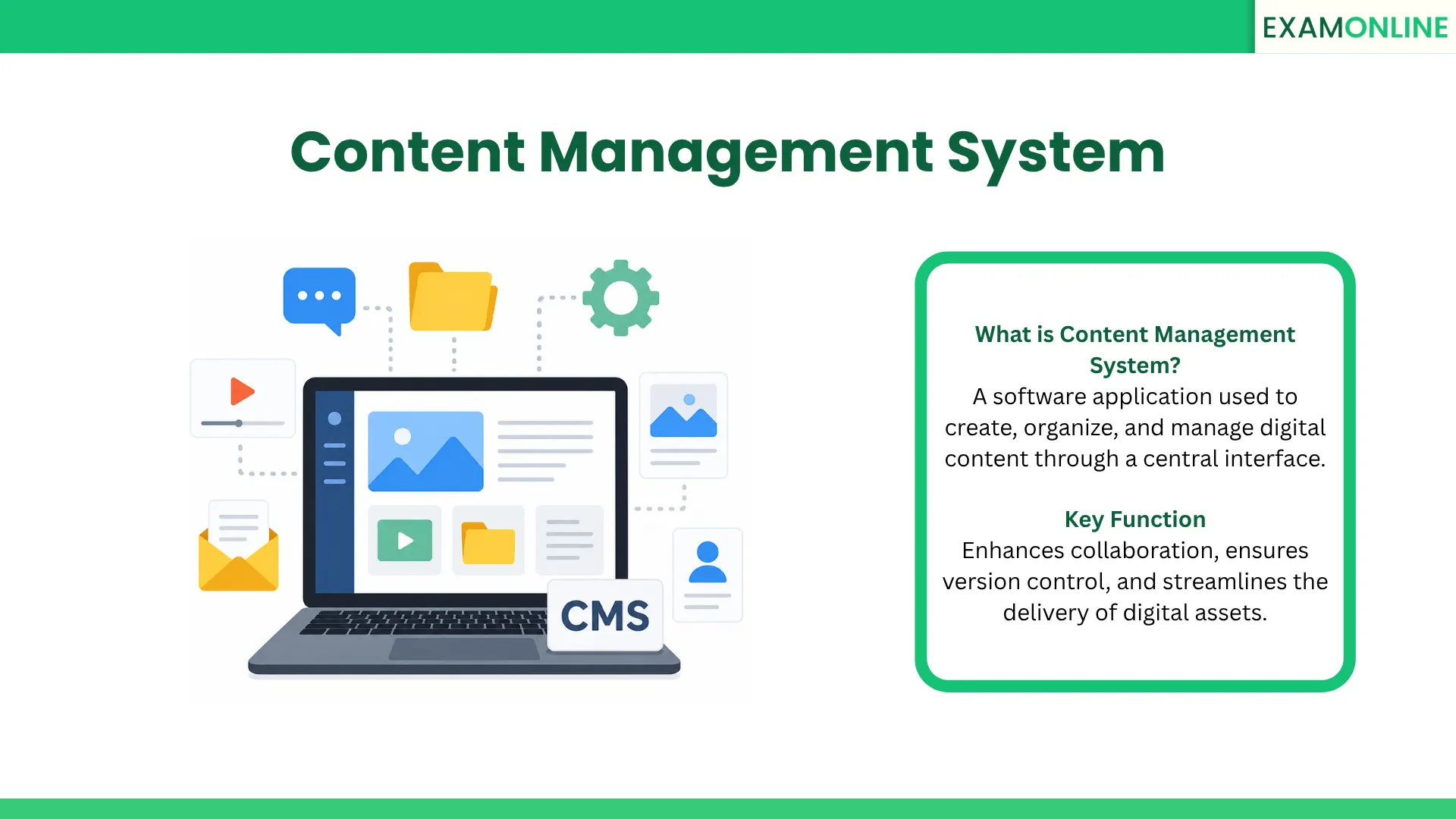
What is a Content Management System?
A content management system is a specialized software application that enables users to manage digital content without requiring deep technical or programming knowledge. It provides a centralized platform for the creation, modification, and organization of digital assets, ranging from text and images to complex multimedia files.
In a professional environment, a content management system acts as the “nerve center” for institutional knowledge. When integrated with Digital Evaluation Software, it allows administrators to maintain a structured library of items that can be pulled for a computer-based assessment. By removing the complexity of manual database management, it ensures that content creators can focus on quality and accuracy.
Core Components of a Content Management System
A high-performing system is built on two primary structural components that work in tandem to manage the content lifecycle:
- Content Management Application (CMA): This is the user interface that allows authors and editors to design, upload, and format content. It ensures that those without coding expertise can easily input data.
- Content Delivery Application (CDA): This is the backend service that takes the content created in the CMA, stores it correctly, and makes it accessible for the end delivery platform, such as an Assessment Engine.
Types of Content Management Systems
Depending on the architectural needs of the organization, these platforms generally fall into distinct categories:
- Traditional (Coupled) CMS: These platforms link the backend content creation tools directly to the frontend presentation layer. They are highly user-friendly and excellent for standard websites or basic portals.
- Headless CMS: In a headless architecture, the backend repository is completely separated from the frontend display. Content is delivered via APIs to any device, such as a mobile application, a smartwatch, or a custom Assessment Engine. This offers ultimate flexibility for developers.
- Cloud-Based (SaaS) CMS: Hosted entirely in the cloud, these systems require no local server maintenance. They provide automatic security updates and are highly scalable for global organizations managing massive testing databases.
Key Features of a Content Management System
To effectively support large-scale operations, a content management system must offer specific functional capabilities:
- Version Control: The ability to track every change made to a file, allowing users to see the history of edits and revert to previous versions if necessary.
- Role-Based Access Control: A security feature that ensures only authorized personnel can view or edit specific folders, which is critical for maintaining Test Integrity.
- Metadata and Search: Advanced tagging systems that allow users to find specific content instantly based on difficulty levels, subject matter, or creation date.
- Multimedia Integration: Seamless support for various file formats, including high-definition video and interactive simulations.
Benefits of Using a Content Management System
Organizations that implement a centralized system for their digital assets realize several significant advantages:
- Efficiency and Speed: By using templates and bulk-upload tools, teams can organize a massive amount of information much faster than through manual filing systems.
- Standardization: A centralized system ensures that all content follows the same formatting and quality standards, regardless of who created it.
- Enhanced Security: Centralizing data makes it easier to apply high-level encryption and monitor access logs to prevent unauthorized data leaks.
- Collaboration: Multiple users can work on the same project or Question Bank simultaneously, with the system managing the workflow and approval stages.
Conclusion
A content management system is an essential tool for any organization looking to scale its digital operations while maintaining strict control over its assets. By centralizing the creation and delivery of information, these systems reduce administrative overhead, minimize errors, and ensure that the right content reaches the right audience at the right time. Whether managing corporate documents or educational materials, a robust system provides the structure and security needed to turn raw data into a strategic asset.
ExamOnline complements these workflows by providing a secure, encrypted Question Bank feature that seamlessly integrates with its Assessment Engine for high-stakes evaluations.
Related Keywords: Computer Adaptive Testing, Talent Analytics, Competency-Based Assessment, Digital Evaluation, Digital Exams .