
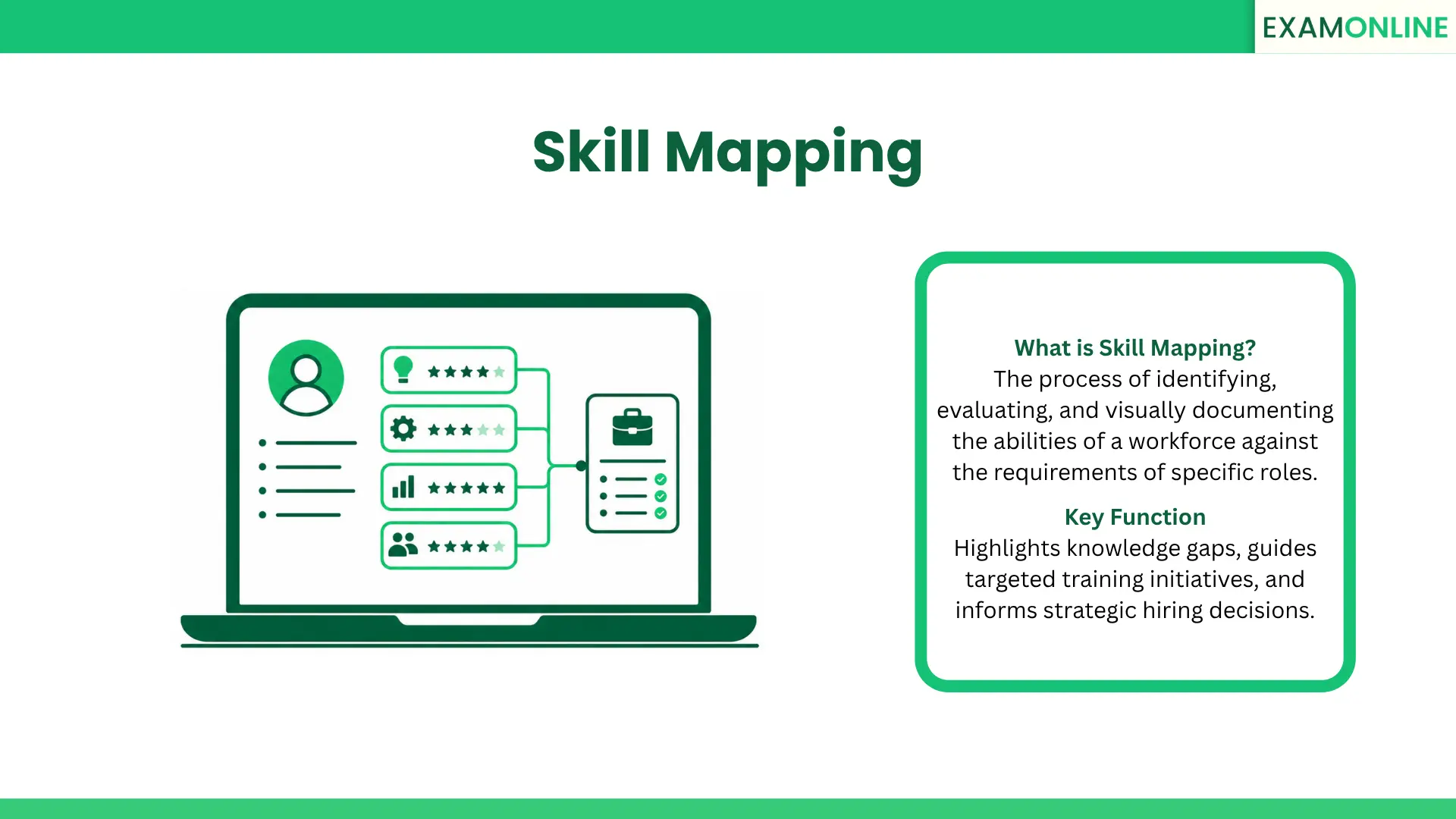
What is Skill Mapping
Skill Mapping is the strategic and analytical process of identifying, evaluating, and documenting the specific abilities required to perform a job, alongside the actual abilities currently possessed by an organization’s workforce.
It acts as a visual blueprint of a company’s talent pool. By charting out what an organization needs versus what it currently has, leadership can gain absolute clarity on their operational strengths and vulnerabilities.
This conceptual framework moves beyond traditional resumes and job titles. It breaks down roles into specific, measurable competencies, allowing organizations to make highly informed, data-driven decisions regarding workforce planning, internal promotions, and targeted training.
The Core Process: How It Works
Creating an effective map requires a structured, multi-step approach that aligns human resources with broader business objectives:
- Define Role Requirements: The organization must first outline the precise technical and soft skills required for every critical role. This creates the “ideal” competency baseline.
- Assess Current Capabilities: Managers evaluate the existing workforce to determine their current proficiency levels. This is typically done through structured performance reviews, self-assessments, or practical evaluations.
- Identify the Gap: By comparing the ideal requirements against the current reality, the organization performs a Skills Gap Analysis. This clearly highlights areas where the team is lacking critical knowledge.
- Develop an Action Plan: Once the gaps are visible, leadership can design targeted Employee Development programs, initiate cross-training, or open new hiring requisitions to acquire the missing talent.
Strategic Benefits for Organizations
Implementing this analytical framework provides massive strategic advantages, transforming how an organization manages its most valuable asset:
- Optimized Training Budgets: Instead of offering generic, company-wide training, organizations can deploy highly specific educational resources only to the employees who actually need them, driving a much higher Return on Investment (ROI).
- Proactive Workforce Planning: It allows companies to look into the future. If leadership knows the industry is shifting toward artificial intelligence, they can map current capabilities and begin reskilling employees months before a crisis hits.
- Enhanced Talent Management: It provides employees with total transparency. When workers can see exactly what competencies are required to reach the next level in their career, it boosts motivation and improves overall retention.
Types of Competencies Evaluated in Skill Mapping
To ensure a comprehensive analysis, a thorough Skill Mapping initiative must evaluate multiple categories of human capability. Focusing only on technical knowledge creates an incomplete picture. A robust framework generally categorizes abilities into three distinct areas. First, hard skills are evaluated, which include specific technical proficiencies like coding languages, software operation, or financial modeling. Next, soft skills are heavily analyzed, measuring communication, emotional intelligence, and adaptability. Finally, leadership capabilities are assessed, helping organizations use this evaluation to identify future managers by evaluating their strategic thinking and team motivation abilities.
Digital Tools and Software for Skill Mapping
Historically, HR departments relied on massive, cumbersome spreadsheets to track employee capabilities. Today, successful Skill Mapping requires dedicated digital platforms to remain accurate and scalable. Advanced talent management software automates the process by integrating directly with performance reviews and learning management systems. For instance, assessment platforms like ExamOnline can be utilized during the initial evaluation phase to accurately test and verify the actual technical proficiencies of employees. By using secure online examinations to gather data, companies ensure their Skill Mapping foundation is built on verified test results rather than subjective self-reporting.
Common Challenges to Overcome
While the benefits are immense, executing a flawless Skill Mapping strategy introduces specific operational hurdles. The most common challenge is data stagnation. Skill Mapping is not a one-time project; it is a dynamic process. If the resulting map is not updated regularly after training cycles, it quickly becomes obsolete. Furthermore, organizations often struggle with subjectivity during the evaluation phase. If managers grade their favorite employees too leniently, the entire data set becomes flawed. This highlights the absolute necessity of using standardized assessments and objective rubrics when implementing a corporate Skill Mapping protocol.
A Real-World Example
Consider a traditional brick-and-mortar retail company that decides to launch a massive e-commerce division.
To execute this pivot, the company requires entirely new capabilities: digital marketing, data analytics, and supply chain logistics. Instead of immediately firing retail staff and hiring an entirely new digital team, the HR department initiates a skill mapping exercise.
They survey their current retail managers and discover that several possess strong data analysis backgrounds from previous jobs, while others are highly proficient in social media management. The resulting map highlights exactly which existing employees can be safely transitioned into the new e-commerce roles, and exactly which technical gaps (like advanced website coding) still need to be filled through external hiring.
Conclusion
Skill mapping is an indispensable strategy for modern talent development.
By actively identifying and visualizing the competencies within an organization, leaders can completely eliminate the guesswork from their human resources strategy. This structured approach ensures that a company is always equipped with the precise talent required to adapt to market changes, close operational gaps, and achieve long-term business objectives.
Related Terms: Skills Assessment, Screen Sharing, Proctored Examination, Online Examination Management System, Manual Test Generation.