
What is Technical Development
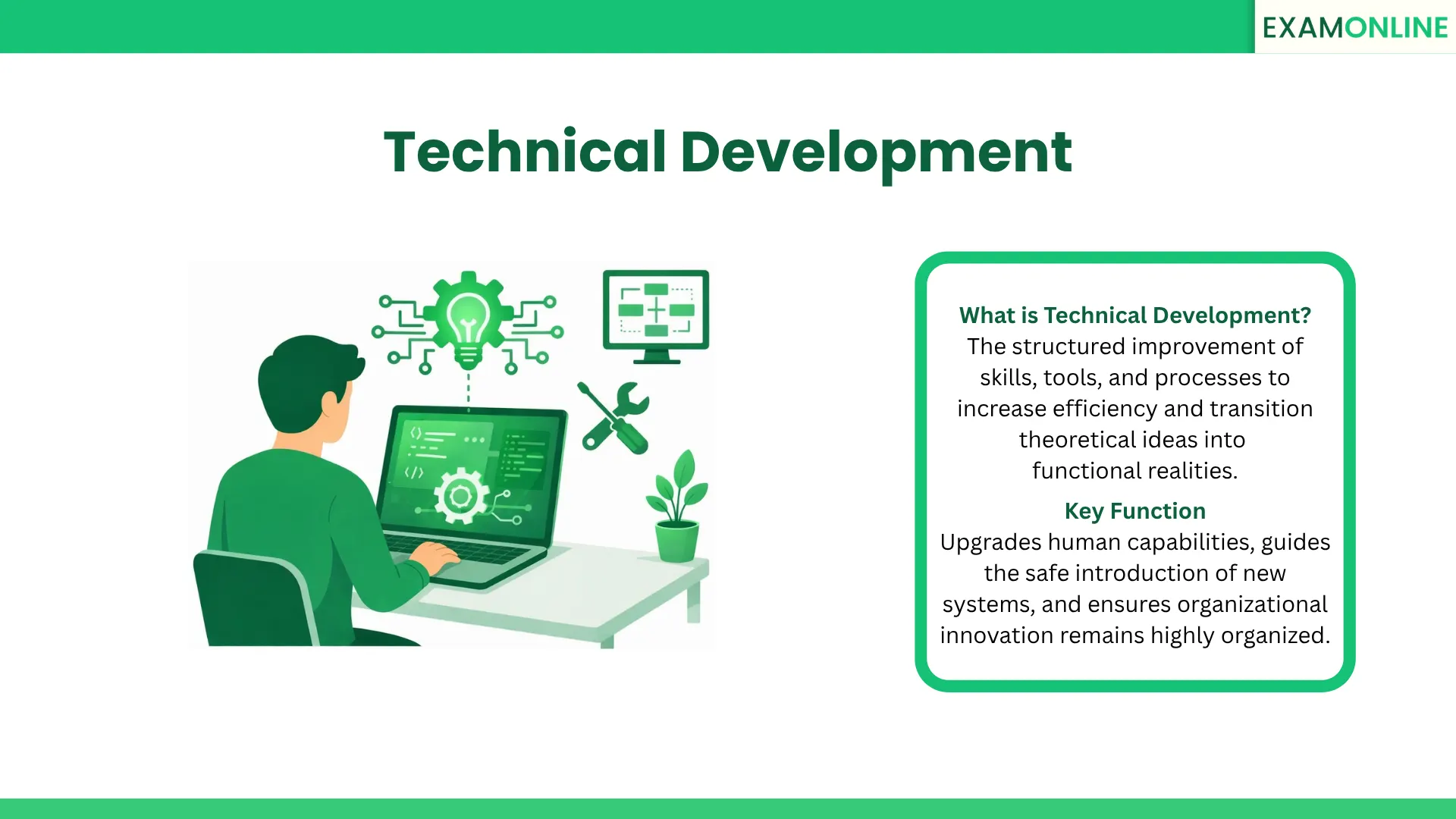
Technical Development is the systematic and structured process of improving skills, systems, and operational processes to maximize efficiency. It is the critical bridge that transitions a theoretical hypothesis into a fully functional, tangible reality.
This multi-faceted concept spans across both human and operational domains. On one side, it involves rigorous employee training to ensure a workforce can handle complex tools. On the other side, it involves research-driven innovation to advance systems, streamline operations, and ultimately drive significant economic growth. By applying a highly staged, structured approach, organizations can manage the introduction of new innovations without disrupting their core business.
Key Aspects of Technical Development
To fully grasp this concept, it is helpful to break it down into its core operational pillars. These aspects ensure that an organization evolves holistically:
- Employee Skill Development: A company’s systems are only as effective as the people operating them. This aspect focuses heavily on providing structured Technical Training through intensive workshops and seminars. It ensures that personnel possess the exact Domain Skills required to execute complex job functions efficiently.
- Technology Development Process (TDP): This is the strict, standardized framework used to manage the introduction of new methodologies. It guides an idea safely through feasibility studies, rigorous laboratory testing, and final validation.
- Innovation and Optimization: The continuous, aggressive push to invent entirely new products or to drastically streamline existing ones, thereby boosting overall productivity and market value.
- Application-Specific Development: The process adapts based entirely on the field. In civil engineering, it means applying theoretical math to real-world infrastructure. In environmental sciences, it involves developing advanced sensors to monitor ecological shifts. In computing, it drives the creation of cutting-edge quantum communication networks.
Technical vs. Technological Development
While these terms are frequently used interchangeably in casual conversation, they represent two distinctly different focal points within the business and scientific communities:
- Technical Development (Human Focus): This concept centers primarily on human capability. It involves Digital Upskilling, active Reskilling, and Cross Skilling of personnel. The goal is to elevate the technical proficiency and practical expertise of the actual workers.
- Technological Development (Tool Focus): This concept centers entirely on the physical creation, mechanical engineering, and software coding of the actual tools, machines, and digital platforms themselves.
Core Components of a Technical Development Plan
When an organization decides to build a new system or upgrade its capabilities, it must follow a rigid, step-by-step roadmap to avoid costly failures:
- Feasibility Analysis: Before any money is spent, teams conduct deep literature reviews, analyze existing industry patents, and perform strict evaluations to determine if the proposed project is scientifically and financially viable.
- Prototyping and Testing: Moving from the drawing board to the laboratory. Engineers build early, functional models to validate the core concepts under real-world pressures.
- Risk Management: The team proactively identifies the most uncertain or dangerous variables in the project. By prioritizing and testing these specific aspects early, they can manage potential failures before scaling up.
- Implementation: The final phase. The fully validated process or upgraded skill set is officially scaled up and permanently integrated into the organization’s daily workflows.
Benefits of a Strategic Approach
Organizations that commit dedicated budgets to this systematic evolution secure massive, long-term advantages:
- Maximized Operational Efficiency: By continuously optimizing systems, companies eliminate outdated bottlenecks and dramatically speed up their production cycles.
- Future-Proofed Workforce: Investing heavily in human development ensures that the staff remains agile and highly capable, ready to adapt the moment a new industry standard emerges.
- Market Leadership: Companies that successfully master the transition from theoretical ideas to functional realities consistently outpace their stagnant competitors, securing a dominant position in their respective industries.
Conclusion
Technical development is an indispensable driver of progress. By taking a balanced approach that equally values the upskilling of human talent and the rigorous testing of new operational systems, organizations can achieve sustainable innovation. It removes the guesswork from growth, ensuring that every new idea is properly vetted, expertly built, and seamlessly integrated to deliver maximum value.
Related Terms: Psychometric Test, Screengrab, Rich Feedback, Portfolio Assessment, Online Exam Screen.