
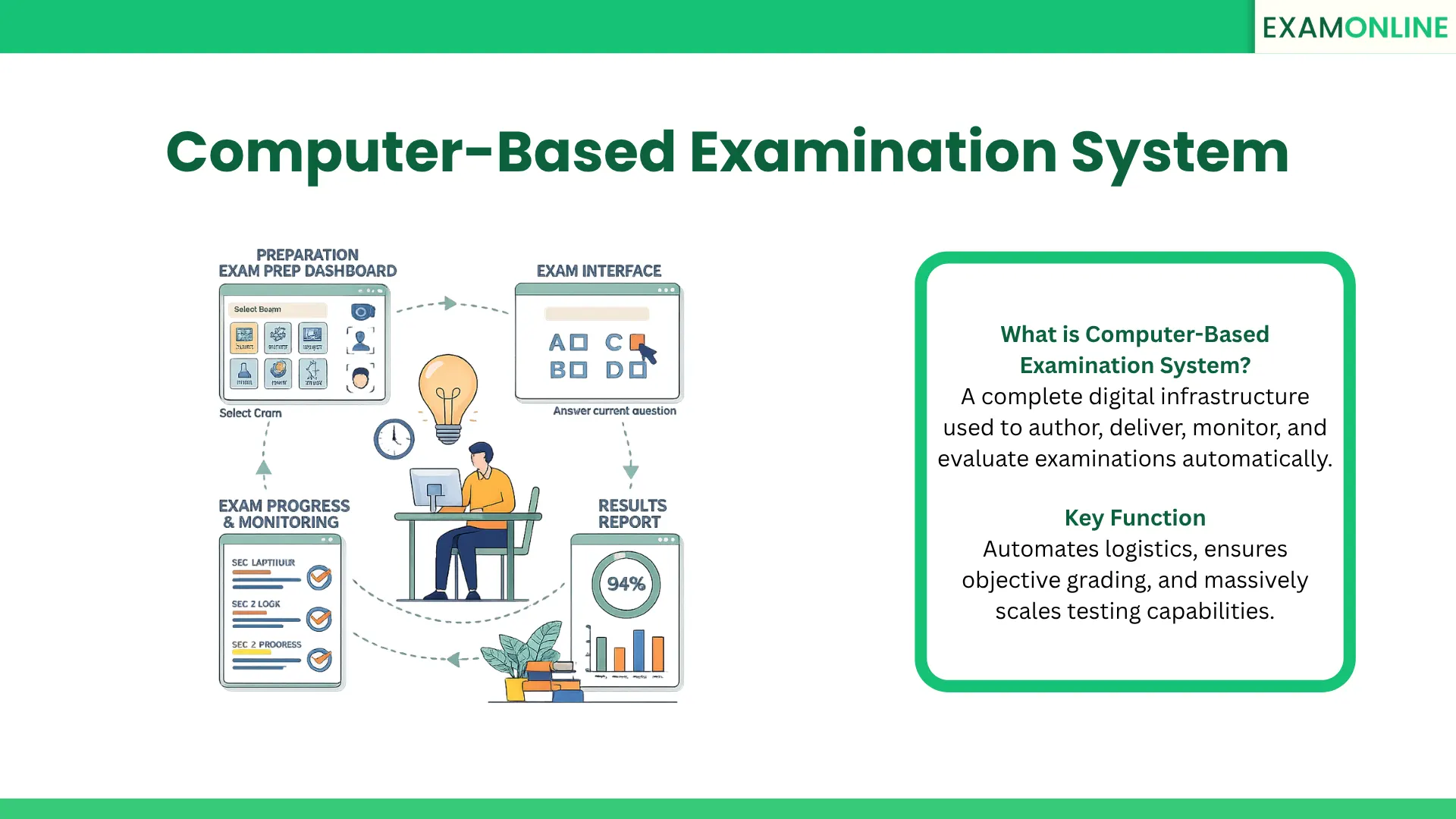
What is a Computer-Based Examination System?
A computer-based examination system is an integrated software platform used to automate the entire lifecycle of testing and candidate evaluation. Instead of relying on physical test centers, printed booklets, and manual grading, this system digitizes every phase of the assessment journey.
At its core, it acts as a centralized hub for educators, HR professionals, and certification bodies to manage testing at scale. Powered by advanced Digital Evaluation Software, a computer-based examination system provides a highly secure, standardized, and efficient environment to measure candidate proficiency, ensuring that organizations can conduct evaluations seamlessly across the globe.
Key Aspects of the System
To replace traditional testing effectively, a robust computer-based examination system must operate on these foundational principles:
- Complete Automation: From the moment a candidate registers to the instant their scorecard is generated, manual administrative intervention is minimized.
- Standardized Environments: Every test-taker, regardless of their geographical location, experiences the exact same interface, instructions, and time constraints.
- Uncompromising Security: The system prioritizes strict Test Integrity through encryption, randomized questioning, and restricted browser access.
- Agile Scalability: The architecture is designed to handle anything from a single customized exam to tens of thousands of simultaneous users without performance degradation.
Core Components of a Computer-Based Examination System
A fully functional testing platform requires three tightly integrated architectural components:
- The Authoring & Management Hub: The administrative backend where exam creators upload syllabi, configure test parameters, and build a secure repository of questions.
- The Candidate Delivery Interface: The front-end portal where candidates log in, verify their identity, and navigate the exam questions in a distraction-free environment.
- The Grading & Analytics Module: The backend Assessment Engine that instantly scores responses, including complex logic and coding tasks, and translates the raw data into actionable reports.
Application of the System
The versatility of a computer-based examination system makes it the standard across various high-demand sectors:
- Corporate Talent Acquisition: HR departments use the system to deploy technical and cognitive tests to thousands of applicants simultaneously, narrowing down the talent pool efficiently.
- Academic Summative Testing: Universities deploy a Remote Exam for final semesters, allowing distance-learning students to be evaluated securely from their homes.
- Professional Certifications: Licensing bodies use the system to deliver standardized, high-stakes credentialing exams for the IT, healthcare, and finance industries.
- Internal Compliance & Training: Organizations utilize the platform to verify that employees have understood mandatory regulatory protocols or technical upgrades.
Benefits to the Organization
Adopting a comprehensive computer-based examination system yields transformative operational advantages:
- Elimination of Logistical Costs: Organizations permanently remove the heavy expenses associated with printing test papers, booking examination halls, and hiring human proctors.
- Instantaneous Result Declaration: Automated grading eliminates the traditional weeks-long waiting period, drastically accelerating hiring or certification timelines.
- Enhanced Fairness: Machine-led scoring removes human error and subjective bias, ensuring that every candidate is evaluated strictly on their merit.
- Data-Driven Decision Making: The system captures micro-level data (such as time spent per question), feeding it into Talent Analytics dashboards that help organizations refine their training and hiring strategies.
Features of a Modern System
To be considered enterprise-grade, the underlying Digital Evaluation Software must be equipped with specialized capabilities:
- AI Based Proctoring: Built-in security layers that use webcams and machine learning algorithms to detect unauthorized objects, extra voices, or suspicious candidate movements in real-time.
- Secure Browser Lockdown: Technology that forces the candidate’s device into a kiosk mode, disabling keyboard shortcuts, screen sharing, and access to other applications.
- Advanced Question Formats: The ability to move beyond multiple-choice by supporting multimedia uploads, complex mathematical equations, and interactive simulations.
- Audit Trails: Detailed, timestamped logs of every candidate action during the exam, providing definitive proof in the event of a grading or behavioral dispute.
Conclusion
A computer-based examination system is the definitive solution for modernizing how knowledge and skills are evaluated. By transitioning away from outdated paper processes, organizations gain unparalleled security, speed, and analytical depth. With an enterprise-ready platform like ExamOnline, institutions can confidently conduct high-stakes assessments anywhere in the world, knowing that their testing ecosystem is protected by the most advanced digital evaluation technology available.
Related Keywords: Digital Evaluation Software, Assessment Engine, AI Based Proctoring, Remote Exam, Talent Analytics.