
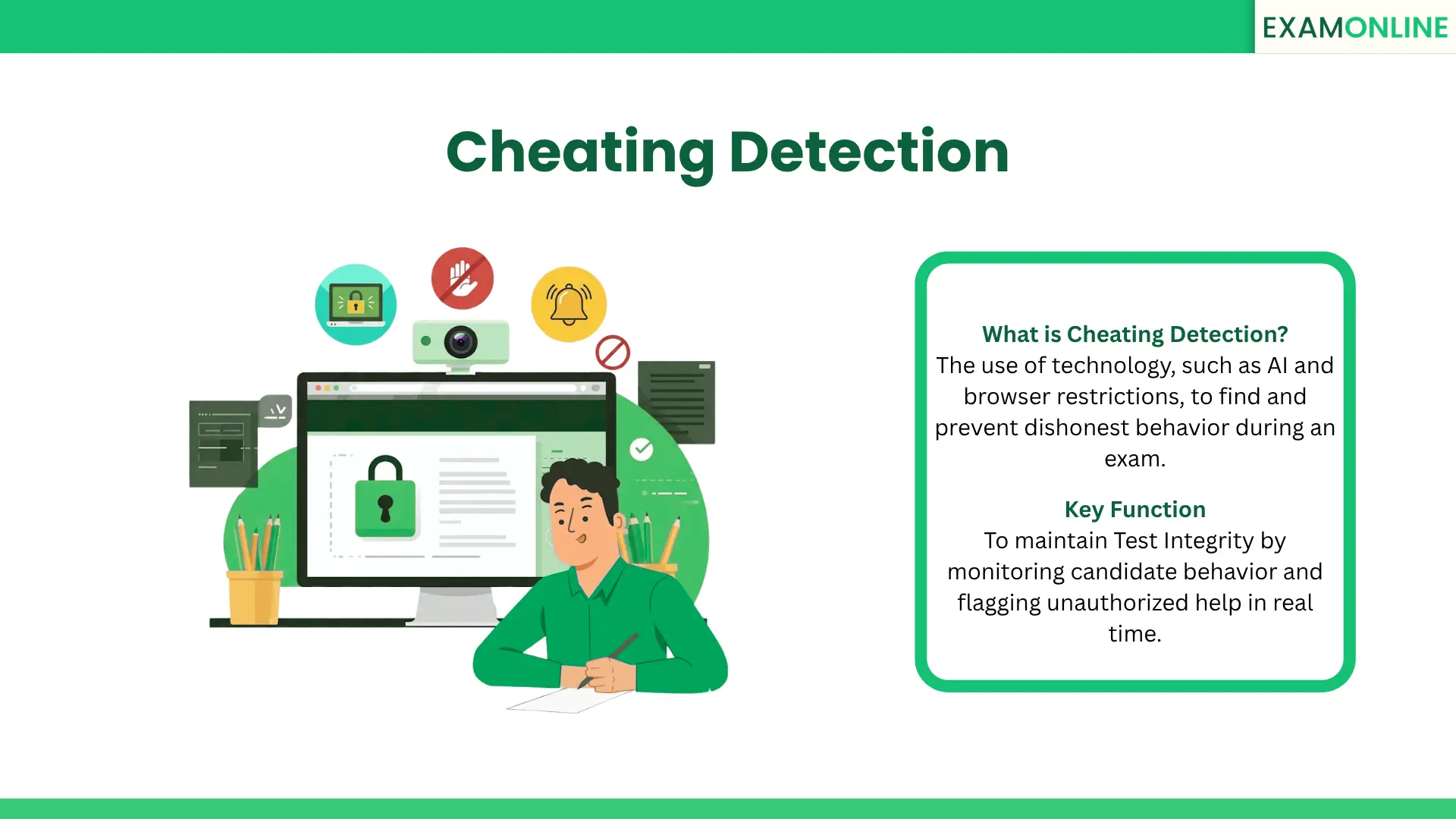
What is Cheating Detection
Cheating Detection is the process of identifying and flagging fraudulent activities or unauthorized assistance during an examination. In the digital age, this has evolved from a teacher walking between desks to a sophisticated technical process. It involves using specialized software and hardware to monitor a candidate’s environment, behavior, and device activity to ensure that the results of an Online Exam are earned through genuine merit.
For any Online Examination System, cheating detection is the cornerstone of Test Integrity. Without robust detection mechanisms, the value of a certification or a job offer is diminished. By employing a combination of AI Based Proctoring and behavioral analytics, organizations can create a virtual fortress that discourages malpractice and provides a level playing field for every individual in the Talent Pool.
How Cheating Detection Works
Modern cheating detection uses a multi-layered approach to monitor both the physical and digital space around a candidate:
- Identity Verification: The process begins with Biometric Authentication to ensure the person taking the test is not an impersonator.
- Environment Scanning: Before the test starts, the candidate may be asked to perform a 360 degree room scan using their webcam to ensure no hidden notes or unauthorized people are present.
- Real Time AI Monitoring: During the exam, AI Based Proctoring algorithms track eye movements, head positioning, and audio levels. If the candidate looks away from the screen frequently or if the system detects a second voice, an AI Flag is generated.
- Digital Restriction: A browser lockdown prevents the candidate from opening new tabs, using search engines, or accessing external applications while the test is active.
- Post Exam Analysis: Proctors or administrators review session logs and video recordings of flagged incidents to confirm whether a violation actually occurred, ensuring a fair final judgment.
Cheating Detection Technologies
To maintain security in a Remote Exam, various cutting edge technologies work in tandem to create a secure environment:
- Multimodal AI Proctoring: This technology uses computer vision to track gaze, head pose, and the presence of multiple people. It can distinguish between a quick glance and prolonged off screen focus.
- Audio and Speech Analytics: Advanced systems can detect whispers, background talking, or even the distinct sound of someone reading questions aloud to an accomplice.
- Biometric Identity Management: Beyond simple face matching, this includes liveness detection to prevent the use of high resolution photos or video loops to bypass security.
- Keystroke and Mouse Dynamics: Behavioral biometrics analyze how a candidate types or moves their mouse. Since these patterns are unique to each person, the system can detect if another individual has taken over the exam.
- Virtual Machine and Screen Sharing Detection: Sophisticated software can block the use of virtual machines or remote desktop tools like TeamViewer, which are often used to let a “proxy” take the test from another location.
Key Features of Cheating Detection Systems
- Object Detection: AI that can identify prohibited items like smartphones, tablets, or books within the camera’s view.
- Browser Lockdown: Restricts the candidate’s computer to the exam window only, disabling copy-paste and secondary tabs.
- IP and Geolocation Tracking: Identifies suspicious network activity, such as multiple candidates logging in from the same IP address or location.
- Real Time Dashboard: Allows human proctors to monitor multiple candidates at once and intervene via chat or video if suspicious behavior is flagged.
Benefits of Cheating Detection Systems
- Upholds Credibility: Ensures that the certificates or degrees issued by an institution maintain their market value and professional respect.
- Fairness for Honest Candidates: Protects the hard work of honest students by ensuring that cheaters do not gain an unfair advantage in Recruitment or academic rankings.
- Scalable Oversight: Allows one human proctor to monitor dozens of candidates simultaneously by letting the AI handle the heavy lifting of initial flagging.
- Psychological Deterrent: The mere presence of visible detection tools, such as a recording icon, significantly reduces the likelihood of a candidate attempting to cheat.
- Data Backed Decisions: Provides objective video and log evidence in case a candidate disputes a disqualification.
Applications of Cheating Detection Systems
- Corporate Recruitment: Ensuring that high potential candidates in a global Talent Pool are evaluated fairly during pre-employment screening.
- University Finals: Maintaining the standards of higher education during remote learning and distance education programs.
- Professional Licensing: Securing high stakes exams for doctors, lawyers, and engineers where Test Integrity is a matter of public safety.
- Campus Hiring: Managing large scale drives where thousands of students are tested at once, making manual invigilation impossible.
Conclusion
Cheating Detection is no longer just about catching bad actors; it is about protecting the integrity of the entire educational and professional ecosystem. As cheating methods become more high tech, detection tools must stay one step ahead. By integrating these features into a robust Online Examination System, organizations can focus on what really matters: identifying the best talent with absolute certainty. ExamOnline leverages cutting edge AI and Remote Proctoring to ensure that every pass result is a true reflection of excellence.
Related Terms: AI Based Proctoring, Remote Proctoring, Online Examination System, Test Integrity.