
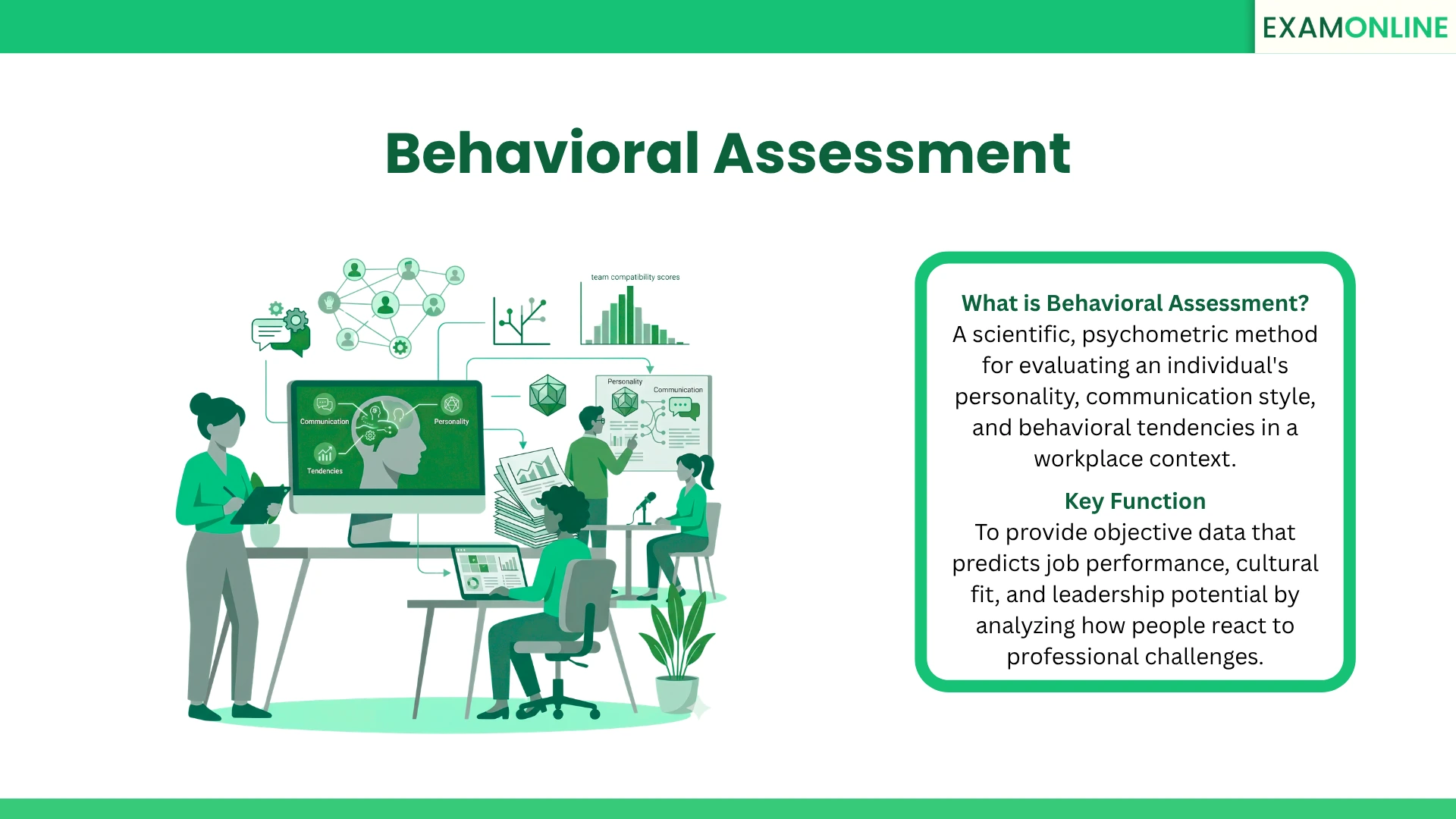
What is Behavioral Assessment
Behavioral Assessment is a structured, data-driven methodology designed to map an individual’s psychological traits, interpersonal tendencies, and problem-solving styles within a professional environment. While technical evaluations confirm a candidate’s “know-how,” behavioral assessments investigate their “will-do”—the inherent patterns of action that dictate how they handle pressure, collaborate with colleagues, and adapt to shifting organizational goals. By translating abstract human qualities into quantifiable metrics, these tools allow organizations to move beyond the superficial impressions of a traditional interview and reach a more profound understanding of a person’s long-term professional trajectory.
In a modern corporate landscape where technical skills have a shorter shelf-life than ever, behavioral attributes have become the primary indicators of “Learning Agility” and resilience. A well-constructed behavioral assessment identifies the core drivers that influence an individual’s decision-making process, making it a vital asset for everything from high-volume Campus Hiring to the delicate process of Leadership Succession Planning.
How Behavioral Assessment Works
The effectiveness of a Behavioral Assessment lies in its ability to simulate real-world complexity through a controlled digital environment. The typical workflow includes:
- Defining the Success Profile: Before any testing begins, the organization performs Competency Mapping to determine the specific traits—such as empathy, assertiveness, or analytical thinking—that are non-negotiable for the role.
- Multidimensional Stimuli: Candidates engage with various test formats. This might include Situational Judgment Tests (SJT), where they are presented with a workplace dilemma and asked to select the most effective response, or forced-choice questionnaires that reveal their natural preferences.
- Active Response Capture: Advanced platforms go beyond text, utilizing Audio Capture or video prompts to gauge verbal confidence and spontaneous reasoning, providing a richer data set for the evaluation.
- Algorithmic Analysis: The responses are processed through validated psychometric models. These algorithms look for consistency and intensity across different scenarios to build a reliable “behavioral fingerprint.”
- Strategic Reporting: The output is a highly detailed report that compares the candidate’s profile against the job’s requirements. These reports often serve as a blueprint for onboarding and targeted professional development.
Key Features of Behavioral Assessment
- Predictive Validity: Unlike a CV, which looks at the past, these assessments use psychological indicators to predict future performance in novel situations.
- Cultural Alignment Scoring: Features that allow companies to measure how well a candidate’s personal values synchronize with the existing team “DNA.”
- Scenario-Based Immersion: High-fidelity Job Simulations that place the candidate in the “hot seat,” revealing their natural reactions to stress or conflict.
- Bias Mitigation: By focusing on standardized data points, the assessment provides a neutral ground that limits the impact of unconscious human bias during the selection process.
- Scalable Talent Analytics: The ability to aggregate behavioral data across a whole department to identify collective strengths or gaps in the Talent Pool.
Benefits of Behavioral Assessment
- Longevity and Retention: By ensuring a deep alignment between a person’s natural traits and their job requirements, companies see a significant reduction in early-stage turnover.
- Informed Development: These tools provide a clear “Developmental Roadmap,” showing managers exactly where a new hire needs coaching or Digital Upskilling.
- Objective Leadership Identification: It removes the guesswork from internal promotions by identifying “High-Potential” (HiPo) employees who possess the emotional intelligence required for management.
- Enhanced Candidate Experience: Professional, well-designed assessments give candidates a sense of the company’s sophistication and provide them with insights into their own professional strengths.
Applications of Behavioral Assessment
- Strategic Recruitment: Using behavioral data as a primary filter to identify the “right-fit” candidates before investing in time-heavy interview rounds.
- Conflict Resolution and Team Building: Helping teams understand each other’s communication styles to improve collaboration and reduce workplace friction.
- Succession Planning: Identifying the behavioral traits in middle management that match the demands of C-suite leadership.
- Restructuring and Reskilling: During organizational shifts, these assessments help place current employees in new roles where their natural tendencies will lead to the most success.
- Culture Audits: Assessing the behavioral trends across an entire organization to understand the prevailing “work climate” and where it needs to evolve.
Conclusion
A Behavioral Assessment is much more than a personality test; it is a sophisticated instrument for organizational engineering. By providing a clear, objective view into the human elements that drive business results, it enables leaders to build teams that are not only skilled but also harmonious and resilient. As the future of work becomes increasingly defined by hybrid models and remote collaboration, the ability to assess and understand behavioral nuances digitally through secure, high-performance platforms will be the hallmark of successful, people-centric organizations.
Related Terms: Campus Hiring, Leadership Succession Planning, Digital Upskilling, Reskilling.